
Commercial and Recreational Safety and Survival Training For Mariners Across U.S. Coasts and the Great Lakes

Established in 1985 and located at Sitka Alaska, Alaska Marine Safety Education Association (AMSEA) provides safety and survival training for mariners engaged in commercial and non-commercial activities on the water.
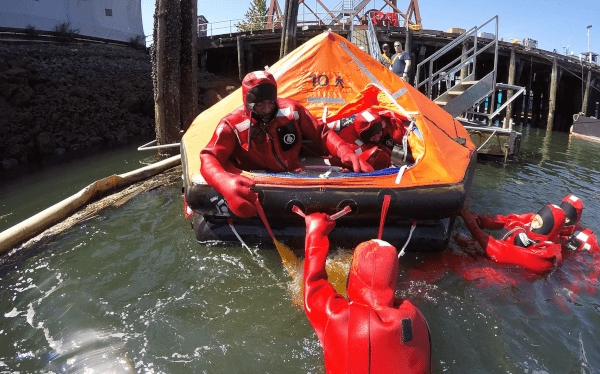
Taught by experienced mariners AMSEA's hands-on training provides mariners with the skills needed to respond to onboard emergencies and survive. AMSEA's instructor network reaches all U.S. coasts and the Great Lakes.
AMSEA also offers marine safety training for subsistence and recreational boaters, youth and women boaters and also provide contract courses for specialized groups or agencies.
Marine Safety Instructor Training is also an option for those interested in teaching. Since 1985, AMSEA has trained over 200,000 people, including more than 1,600 AMSEA Instructors.
Training Programs
Marine Safety Training for Recreational Boaters
- Basic Boating Safety: For boaters operating small power, wind and paddle-powered vessels on near-shore coastal waters and lakes. It is designed for new, inexperienced boaters as well as for more experienced individuals who are new to boating in Alaska.
- 8-Hour Mariner's First Aid & CPR: The Mariner's First Aid and CPR course meets USCG regulatory requirements. Candidates completing the course receive a certification card that is valid for two years.
Marine Safety Instructor Training
- Marine Safety Instructor Training (MSIT): The MSIT is a U.S. Coast Guard-accepted, 6-day, intensive train-the-trainer course. This program trains individuals to effectively teach cold-water survival procedures, the use of marine safety equipment, and onboard safety drills.
Marine Safety Training for Commercial Fishermen
- 18-Hour Survival Equipment, Procedures & Onboard Drills Training / 10-Hour Onboard Drill Conductor Training: Both the 10-hour and 18-hour courses meet the USCG requirements for commercial fishermen. Everyone who successfully completes these courses is issued a Drill Conductor Card that serves as proof of compliance with USCG training requirements. Topics covered in both courses include - Cold-Water Survival Skills, EPIRBs, Signal Flares, and MAYDAY Calls, Man Overboard Recovery, Firefighting, Flooding & Damage Control, Dewatering Pumps, Immersion Suits and PFDs, Abandon Ship Procedures, Helicopter Rescue, Life Rafts, and Emergency Procedures Drills.
- 5-Hour Fishing Vessel Stability: The Fishing Vessel Stability class is designed to provide practical information and hands-on training on vessel stability and emergency responses to flooding problems which cause many stability casualties.
- 8-Hour Mariner's First Aid & CPR: The Mariner's First Aid and CPR course meets USCG regulatory requirements. Candidates completing the course receive a certification card that is valid for two years.
- Ergonomic Injury Prevention for Commercial Fishermen & Seafood Workers: The course covers fundamentals of musculoskeletal injuries that often occur in commercial fishing; injuries like carpal tunnel syndrome, vibration white finger, low back pain and many others.
Marine Safety Training for Corporations and Agencies
- Onboard Emergency Drills for Commercial Fishermen
- Basic Cold-Water Safety & Survival
- Emergency Procedures for Recreational Boaters
- Safety and Survival for Research Vessel Staff
- Vessel safety for oil spill response personnel
- Cold-Water Safety & Survival for Search & Rescue Personnel
- Shore Survival for Children and/or Adults.
- Coastal Navigation
Other Marine Safety Programs
- Marine Safety Training for Educators & Youth Leaders
LAST UPDATED ON Aug 7, 2021